
Interview with a Composer: Mitch Gardner on creating the sound of Ties That Bind
- M6 Productions

- Mar 19, 2021
- 4 min read
Mitch Gardner is a Leeds based music composer and orchestrator for moving image. He graduated with First Class Honours in Film Music from Leeds Conservatoire and has numerous credits composing music for the BBC and short films.
When did you first get into composing music?
I first properly started to write music when I was 15 or so. I was a huge fan of electronic dance music and was very much inspired to give it a try myself, since then I haven’t really looked back. I have always preferred composing to performing (and still do!). I performed music way before though, I started with clarinet at the age of 8.
Where do you get the ideas for the theme of a piece of music or full length soundtrack?
It’s down to the visuals. I rely on the cinematography and pacing for inspiration. Film scores should never stand out (especially during scenes with dialogue) so it is important to understand what emotion you need to evoke from the scene, by reading it and understanding how you can emphasise the on-screen action without giving too much away.


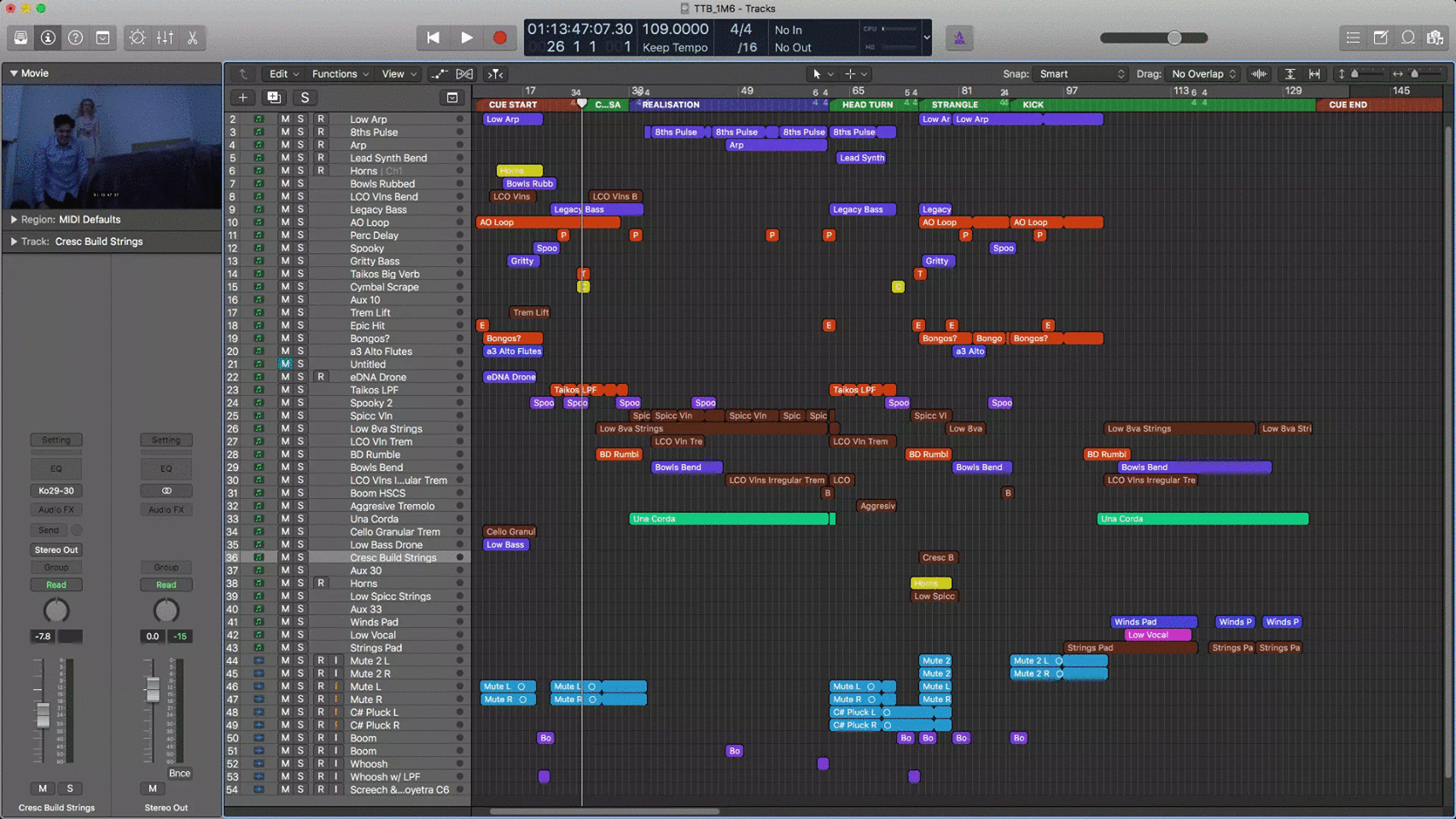


After you've been given a brief, where do you begin and how do you go about planning what you're going to do for the rest of the film?
I guess the main thing is recognising the keywords. Brief’s can be very much like an essay, so the first thing I do is search for the adjectives to break it down and simplify it. Planning is the hardest bit as there are times i’ve written for a scene, gone back to it the next morning and binned the idea completely. I try not to exhaust myself so I have all the creative energy I need to write the best music I can, but the main planning is down to sounds and little motif’s that I repeat that can subconsciously alert the audience of a character or issue.
Who is an inspiration to you in terms of music and how do they influence your work?
There are so many! If I had to choose a few, a first choice would be Hans Zimmer. His groundbreaking change to trends is hugely inspirational, from his quick strings in The Dark Knight to his ambient organ in Interstellar. Another inspiration is Carly Paradis. Her work brings drama alive and the music she writes makes the audio-visual experience one to remember.
Is there a fine line between music complimenting a scene and overpowering it? And if so how do you find the middle ground?
Absolutely, one of the hardest things is recognising this. To me, if I wanted to compliment a scene I have to let it shine. To do this requires getting the key signature and tempo of the music right, especially if it is an important scene. You have to hit the cuts, bring the dynamics up and down when needed, but the important one to me is letting the scenes themselves breathe. This is where I end up sometimes removing the music from a scene and thinking that it may benefit from no music at all, which can be the case sometimes! Another thing is recognising the frequencies of the performers, so that you don’t choose a note that hits that particular frequency which won’t sit right!
Was the soundtrack for Ties that Bind something different to your usual work? And what did you enjoy about creating it?
I actually think every project I work on is different to my previous projects. Ties that Bind made me work particularly on my pacing, meaning that I had to ensure I hit the cuts and let it die down when the dialogue comes in so it doesn’t overpower the scene.
Do you have any tips for wannabe composers who are just starting out?
Composing for film isn’t just about writing music, it’s about being a film aficionado. John Powell said that composers are just filmmakers that can write music, which I think is bang on the money. I would say that it is important to understand the language and ideas you and the filmmakers want to get across. If you know what you want that’s a start, then its understanding how to show this language and emotion in musical terms. If someone gave me a scene to score and said “it needs to be melancholic”, you have to ask “why is it melancholic?” “Is there something on screen that shows why it needs to be in this way?” “what instruments can give this type of emotion?” and the important one to me, is “how does this scene make me feel without any music?” because that’s understanding what the film is already providing.
How long did the process take for creating the Ties that Bind soundtrack, and what did this process involve?
It was quite lengthy in some ways, but also a very short process in other ways. You’ll find sometimes that you absolutely nail one part but struggle with another and I was in this situation with Ties that Bind. The process itself took about 2 months if I remember correctly, which isn’t bad going I don’t think!
Where do you see yourself and your creations in 5 years time?
Good question, but I honestly have no idea. With COVID-19 being a thing now projects have slowed down a bit, so when things pick up more when lockdown restrictions ease I would like to be on more projects. If I pretend COVID won’t exist in 5 years time, i’ll say that i’d like to have won my first music award for best score and I’ll be working on more features with bigger budgets.
What piece of music were you most proud of out of the Ties that Bind soundtrack?
I think I’ll have to go with Corinne’s confession near the end. It’s such a plot twist that you don’t expect, so I had to emphasise that. I think this is one of the music cues in the film that didn’t need to be re-written at all so that always makes me proud, knowing that I’ve nailed it first time.
****
To contact Mitch for music composition or simply to follow his journey and hear his amazing work follow visit his website - mitchgardnercomposition.co.uk
For a more in depth behind the scenes look into ‘Ties that Bind’ and our upcoming projects be sure to follow M6 productions socials - @m6productions


Comments